Pinterest will have you believe a reading nook requires a bay window, a custom built-in bench, and a window overlooking either an English garden or a Brooklyn fire escape. It does not.
A reading nook is four things: a chair you actually want to sit in, a light that doesn't strain your eyes, somewhere to put a cup of coffee, and something to throw over your legs when it's cold. That's the whole formula. You can do it in any corner that gets enough natural light during the day to feel inviting and is far enough from the TV that you won't be tempted by it.
Here's how to put one together, and exactly which pieces I'd start with.
Step one: Pick the corner
The best reading nook corner has three things going for it:
- Some natural light during the day. Not direct sun (that'll fade everything and make you squint), but a corner that doesn't feel like a cave at 2pm.
- A wall behind you. Floating in the middle of a room doesn't feel cozy. A wall — or even a tall piece of furniture — gives the nook a sense of containment.
- Some distance from screens. If your reading chair faces the TV, you will watch the TV. Put the nook somewhere your eyes naturally rest somewhere else.
Bedrooms work. Living room corners work. The end of a hallway works if it's wide enough. A landing at the top of the stairs works. The "guest room nobody uses" works really well.
Step two: The chair
The chair is the most important piece, and it's where most reading nooks fail. A pretty chair that's uncomfortable to sit in for an hour isn't a reading chair — it's a decorative chair. You'll use it twice and then it'll become a place where laundry lives.
What makes a good reading chair: a back that supports you upright (not reclined like a movie chair), arms at the right height to rest a book, and a seat depth that lets you sit all the way back without your feet dangling. Bouclé and chunky woven fabrics are the dominant cozy-bedroom look right now and they hold up well, but check the cushion — too soft and you'll sink into it, too firm and you'll fidget.
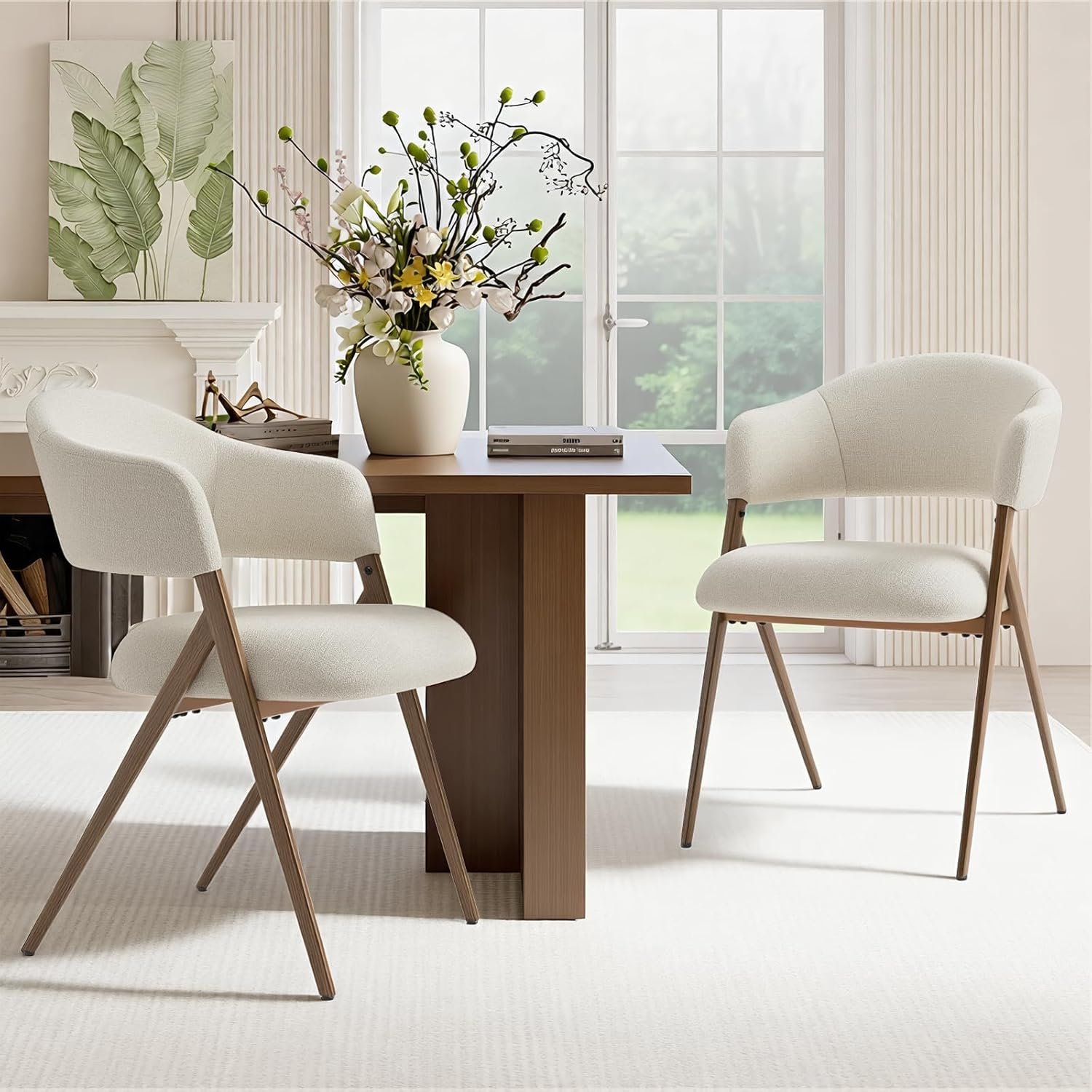
Boucle Accent Chairs, Cream (Set of 2)
This is the chair I'd start with — and at this price you get two, which means a reading corner with two chairs instead of one (or one for the nook and one for the office). The back is upright enough that you can actually read in it without slouching, the arms are at book-resting height, and the bouclé is dense enough that it doesn't pill the way cheaper bouclé does. Cream works in almost any cozy bedroom or living room palette, and the wood-toned legs pair with warm wood floors and oak/walnut furniture.
View on AmazonStep three: The light
Bad reading light is the silent killer of reading nooks. Overhead lights are too harsh. Most table lamps don't reach over the chair properly. The result: you sit down, you start reading, your eyes get tired in fifteen minutes, you put the book down. The chair becomes a laundry pile.
The fix is either a tall table lamp on a side table next to you, or an arc floor lamp that reaches over the chair from behind. Either way, what matters is the bulb: 2700K color temperature (warm white, not daylight), and at least 800 lumens for actual reading. Put it on a dimmer if you can — bright enough to read, dim enough to feel cozy when you're done.
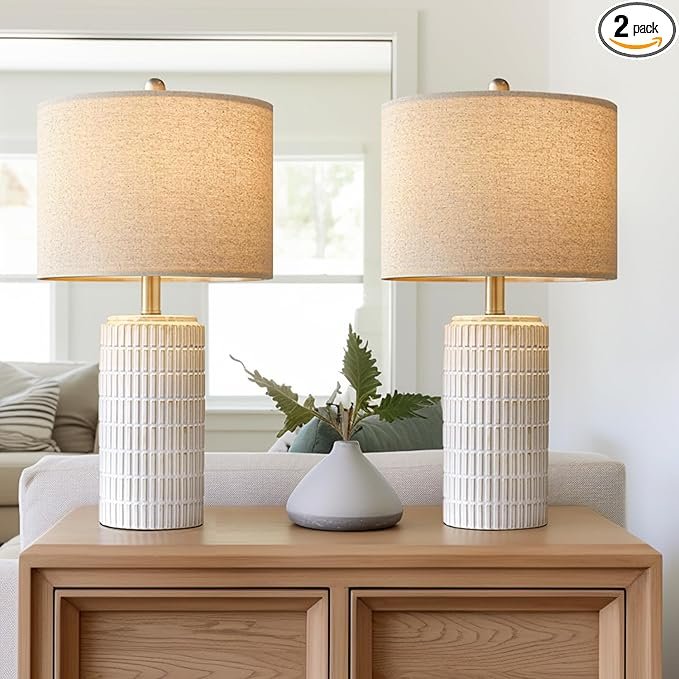
Textured Ceramic Bedside Lamps (Set of 2)
Two lamps for under $60 means you can put one beside the reading chair and one on a nightstand, and they'll match. Cream textured ceramic body, oat linen drum shade, brass-toned hardware. Standard E26 bulbs — pair them with 2700K dimmable LEDs for actual reading-quality warm light. The vertical-rib texture adds quiet detail without breaking a warm minimalist palette.
View on AmazonStep four: The side table
You need somewhere for a coffee, a glass of water, your reading glasses, and the book you finished last week and haven't put back yet. A side table that's too small will frustrate you. Too big and it crowds the chair.
The right size: roughly the same height as the chair's arm, and wide enough to hold a mug plus a book. Storage is a bonus — somewhere to stash bookmarks, a notebook, the magazine you keep meaning to read. A two-drawer nightstand-sized piece works better than most "side tables" because it has actual storage.
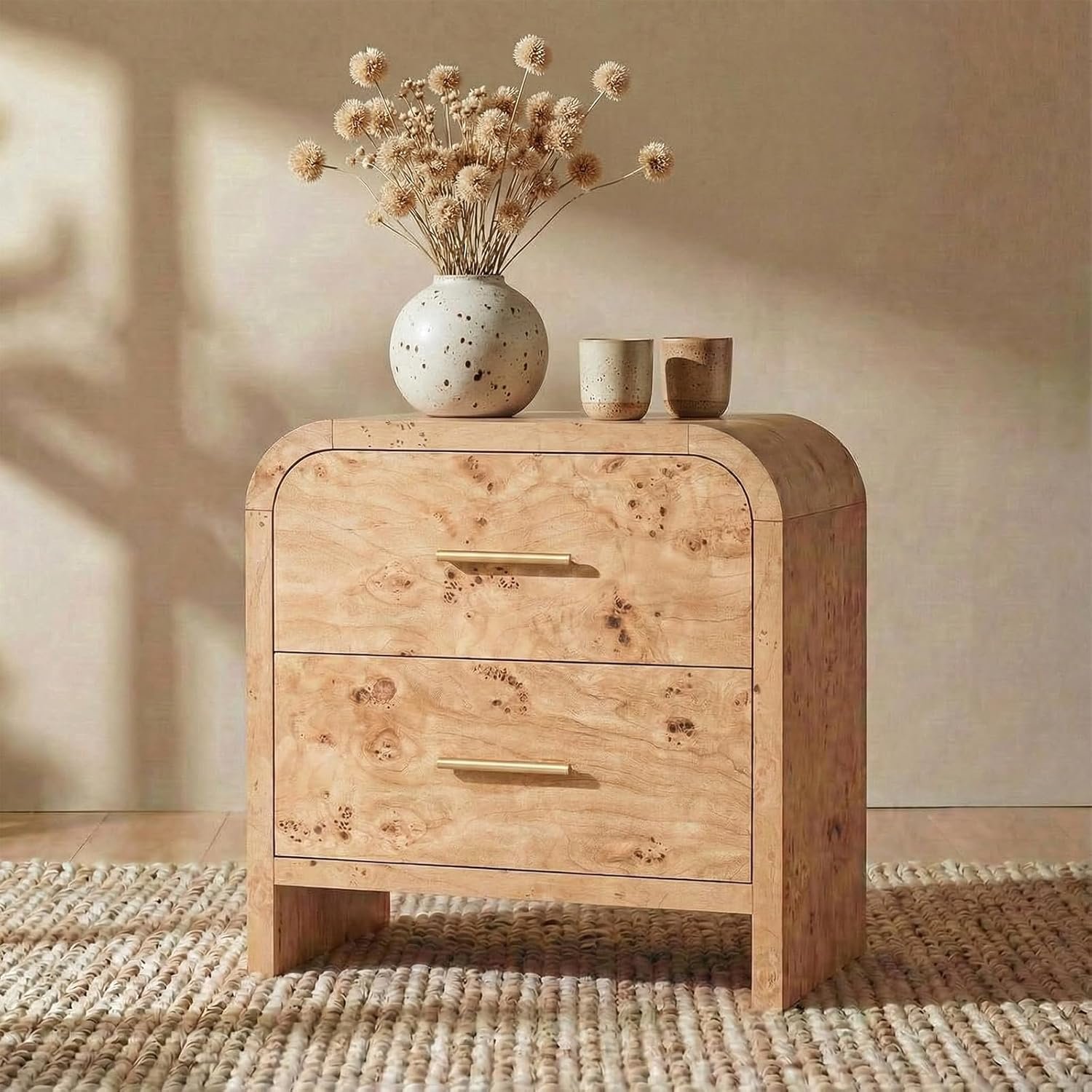
EliteSet Burl Wood 2-Drawer Nightstand
Don't let the word "nightstand" fool you — at 24 inches tall this works perfectly as a side table next to a reading chair, with the bonus of two drawers for stashing bookmarks, glasses, and the eternal pile of "I'll read this next." Light burl wood with brass pulls. The same finish as the EliteSet curved dresser, so if you have one in your bedroom this'll match it. If not, it stands on its own beautifully.
View on AmazonStep five: The throw
This is the piece that makes a reading nook actually cozy instead of just functional. A throw draped over the arm of the chair signals "this is a place where someone actually sits." It's also the easiest piece to swap seasonally if you want the nook to feel different in winter vs. summer.
Two real categories to choose from: a heavyweight wool or cotton throw (4+ pounds, breathable, lasts decades — but $80-150) or a lightweight everyday throw (synthetic, easy to wash, won't last forever — but under $20). The right answer depends on whether the throw is going to live on the chair year-round or whether you're using it seasonally.
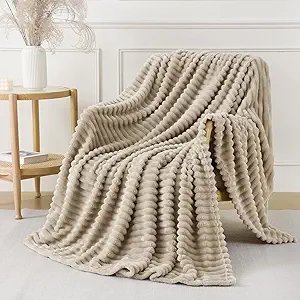
Khaki Ribbed Throw, Lightweight
The lightweight pick. Soft fleece, ribbed/channel texture, oat-toned. Not heirloom quality — synthetic, won't last decades — but at this price it doesn't have to. Buy two in different colors and rotate seasonally, or use it as a guest-room throw where you don't want to spend serious money. For the heavyweight wool option, hold tight — I'm hunting for the right one and I'll add it to the shop when I find one I'd actually buy.
View on AmazonThe optional but worth-it pieces
A floor cushion
For when someone else wants to sit near you while you read. Or for a kid. Or for the dog. Sage or oat color, structured enough to actually sit on without flattening.
A small bookshelf within reach
Not a full library — just somewhere to keep the next two or three books you want to read. A small caned bookshelf or a wall-mounted ledge does the job. Having the next book within reach is the difference between a reading nook you use and one you don't.
A draft stopper if it's by a window
Pretty corners by windows are notorious for being five degrees colder than the rest of the room in winter. A simple draft stopper along the bottom of the window fixes it.
The total
Chairs, lamps, nightstand, and throw: about $359. That's for two chairs and two lamps — which means you can split the setup between a reading corner and a bedroom or office, or have a "reading nook for two" where someone can join you. You can absolutely do it for less if you already have any of these pieces — the chairs are the one thing I'd recommend buying new if you're starting from scratch, because the wrong reading chair is the thing that kills the whole project.
Build the nook on a Saturday. Sit in it on Sunday with a coffee. If you don't feel a small, almost embarrassing surge of "this is mine and I love it," you got the wrong chair. Send it back and try again.
Building out the rest of a cozy living room? The full living room shop has the fluted oak coffee table, an arched floor mirror, and a few smaller pieces. Or if you're starting with the bedroom instead, see three burl & oak dressers under $410.